In his footnote to Howl, instead of offering a straightforward explanation of sources, references, or inspiration, Allen Ginsberg filled the page with an obscene and scattered stream of consciousness which pronounced the aesthetic value and inspiration which could be found in everything, including the maculate stuff. “The bum’s as holy as the seraphim!” wrote Ginsberg. If the minds behind Morsels wrote a footnote, I imagine it’d look rather similar. The game takes the gross and grimey and turns it into something attractive and exciting. It takes a tired setup and makes it feel special. Most importantly, it’s really quite fun to play.
Morsels presents a world where magical cards one day fell from the sky, carrying with them special powers (à la Bakugan) and producing a lot of strange and gross creatures (à la Aaahh!!! Real Monsters). You start your journey as a mouse on the literal bottom of this fantastically filthy world and must work your way to the top, deposing a series of feline despots along the way.
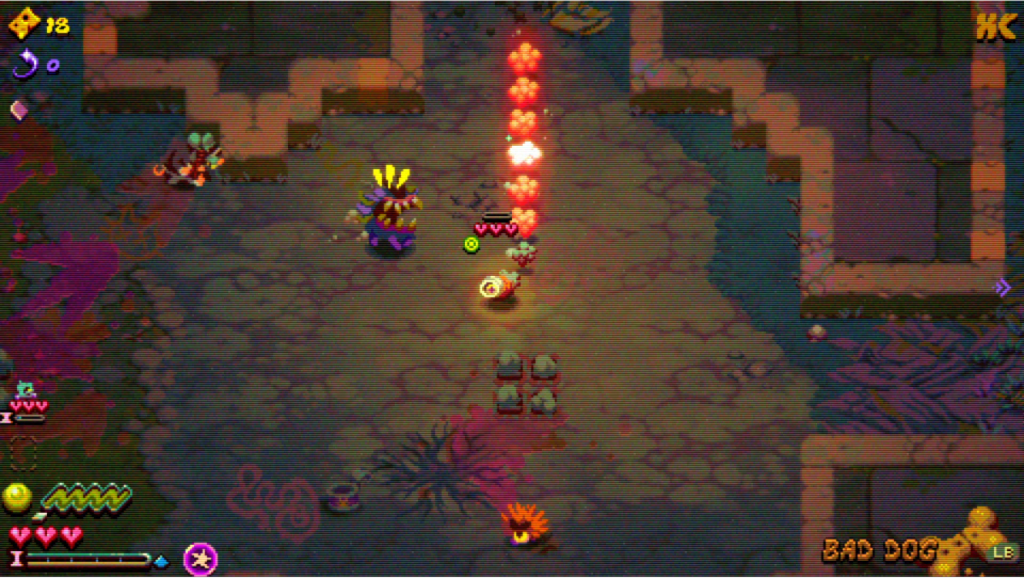
In gameplay terms, this journey takes the shape of roguelite runs through top-down action where you control a crew of up to three morsels who each play in a unique way. Those morsels are key to what sets the game apart from the plethora of other top-down indie roguelites. Attacks, special attacks and movement are all distinct to each morsel and vary widely from straightforward twinstick-shooter-style characters to a sentient entjie spreading toxic smoke clouds. My favourite of these little guys, Pebsel, doesn’t have an attack but rather does damage by hurling himself into enemies at speed. Because attacking requires touching enemies who’d otherwise hurt you, Pebsel is invincible after gaining the amount of inertia he needs to do damage. This means that once at speed, Pebsel can become an unstoppable pinball of death. That is, until you enter the stages without walls whereupon Pebsel is liable to fly off the edge of the level.
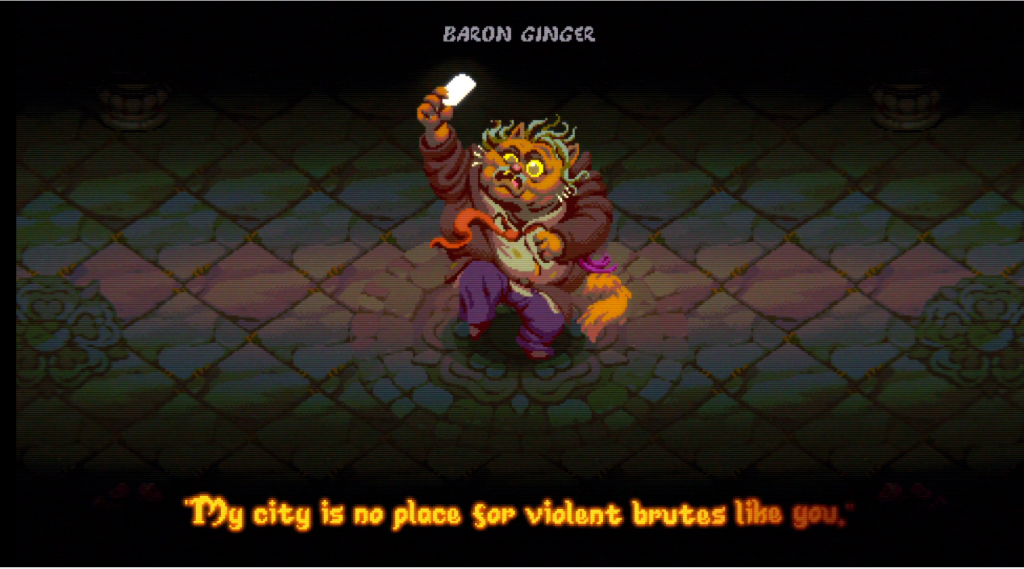
While the gameplay is engaging and offers plenty of novelty in how different playable characters work, the presentation – on every level – is the real star of the show here. To say that the pixel art style of a roguelite is fresh in 2025 makes me feel genuinely insane but I really think Morsels pulls it off. The crt filter, animations and character designs do a lot to separate this game’s look and feel from its (many) contemporaries. Ugly stuff is rendered in absurd and eye pleasing fashion; it all looks so gross but so good. The pixel art is low res enough to be lo-fi but detailed enough to render all the grotty and juicy details of some standout designs. Characters here feel like what would happen if you locked David Cronenberg in Jim Henson’s workshop – they’re nasty but funny; cute but bizarre. The animation that makes it all move is also a joy to look at; enemies squish, contort and burst in ways that make me quite chuffed to be on the other end of the button press that’s turning them to bits. Little details like the way Gumsel’s eyes drag behind when moving fast are especially nice.
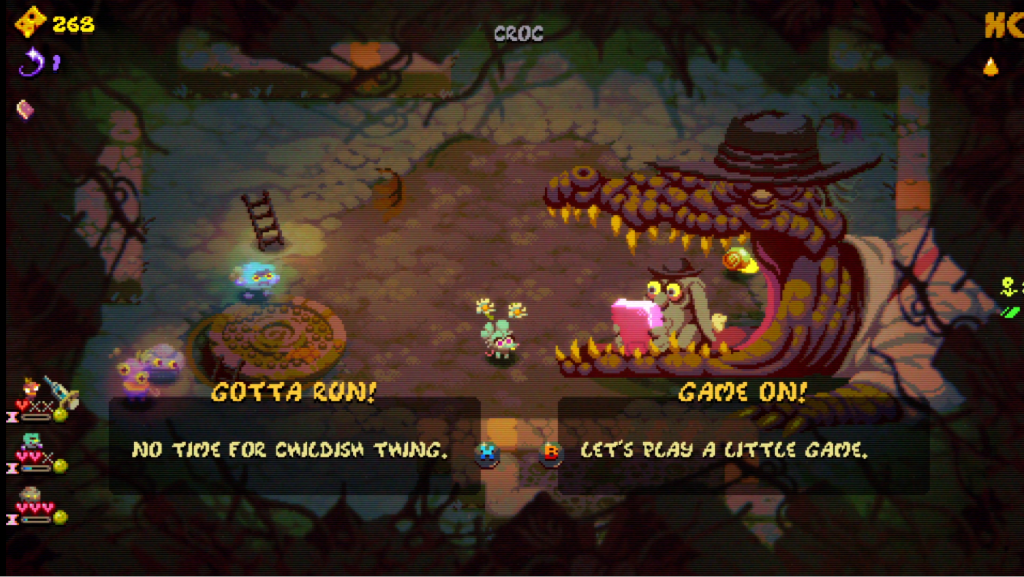
The sound from front to back is absolutely lovely. Squishes, pops and blasts all sound great but the highlights are, maybe expectedly, in the weird: the faint cry of a kilroy-looking creature bouncing on top of a washing machine; the muffled mumbles of a rabbit in a crocodile’s maw; or the eerily accurate sound of a bug buzzing by your ear. The soundtrack behind it all is absolutely stellar – a collection of hazy lo-fi affairs that range from soft ambient tunes to infectious two-step bangers.
The world presented is strange and hostile and sometimes this extends to the game design in a kind of ludonarrative harmony that I’m not sure is intentional. The game’s perks and attributes are not explained and hard to figure out. The benefit of “more speed” is intuitive, “more tofu” can be deduced by trying and seeing, but what exactly the “pitiful” stat means is hard to discern (the Morsels subreddit is puzzling over that one to this day). While referring to guides and wikis has always been a part of how I’ve engaged with the genre, that was more often for things like secret levels or a few mysterious parts of a game. Morsels frequently confronted me with things that I simply didn’t understand. For me, this usually blended into the chaos – it’s easy to just enjoy the ride in this game – but it became more frustrating when I was prompted to make choices. More tofu or more speed – which will it be? Early on I had no clue. There is no wiki and the forum threads that do exist have only partly worked the game out at the time of writing, meaning I was basically on my own to figure out what it all meant. The learning curve for figuring out the stats, power up, and other elements of the game is far more gradual than its contemporaries in the genre; I didn’t understand the levelling system until I was over twenty runs in. On the other hand, what this learning curve also means is that the game takes much longer to feel familiar. For me this kind of worked to the game’s favour in a genre laden with formulas that I’ve spent a lot of time engaging with. That said, it will likely frustrate you if you (understandably) expect a game to be fully intelligible early on.
A roguelite, being by its nature repetitive, lives or dies on its moment-to-moment. While it’s easy to get caught up in progression across runs, picking perks, branching paths and whatnot, the thing which makes it all enjoyable and keeps me coming back is how it feels to play. This is the bit I felt Morsels nails; the game is just really entertaining in the moment. Do I actually think it’s a postmodern opus which deserves a spot next to that urinal thing? No, but I thought it’d be funny to act like it was. That said, everything besides the Ginsberg comparisons I mean sincerely – I really like this game. The music, the visuals, the gamefeel, and the buckets of whimsy are just so enjoyable. I found Morsels irresistible. 8/10